Residential vs Commercial Lawn Maintenance: What's Actually Different?
What property managers and homeowners should expect from residential vs commercial lawn programs.
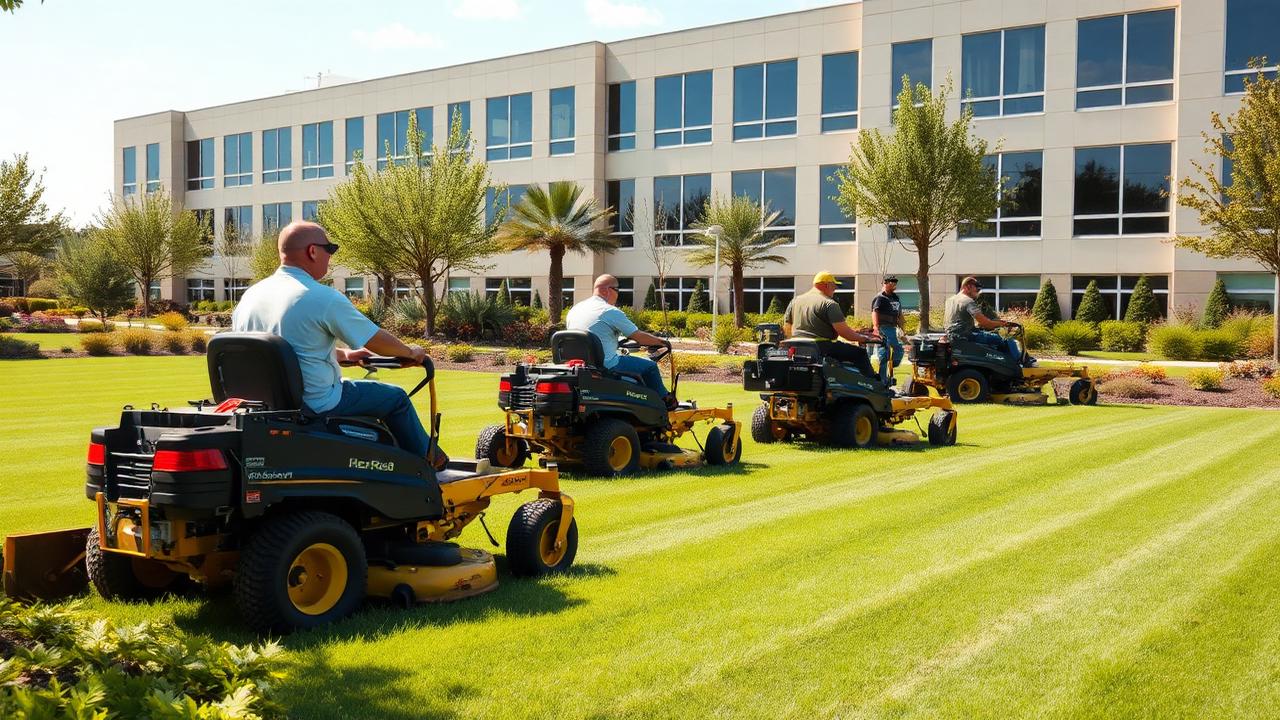
Equipment scale
Commercial sites generally use larger zero-turn or stand-on mowers and run multi-person crews to cover ground efficiently. Residential service uses property-appropriate equipment — usually 36–60 inch decks plus walk-behind and trim mowers for tight access. The wrong equipment for the property is one of the most common reasons commercial vendors deliver poor results on residential properties (and vice versa).
Scheduling discipline
Commercial accounts run on fixed-day routing because property managers and tenants expect it. A retail center can't have crews arriving randomly during business hours; an HOA expects common areas done before the weekend. Residential plans have more flexibility but still benefit from a consistent day each week so homeowners can plan around it.
Contracts and insurance
Commercial work involves real contracts, certificates of insurance (COIs), and reporting. A property manager who can't produce a current COI for a vendor on their property has a serious problem. Residential is usually simpler — but you should still hire a fully insured company, regardless of property type.
Reporting and documentation
Commercial accounts often require service tickets and photo documentation — especially valuable for HOA boards reviewing vendor performance. Residential customers typically don't need formal reporting but appreciate clear communication about scheduling and any issues.
Pricing models
Commercial pricing is usually monthly (annual scope divided across 12 months) for predictable budgeting. Residential is more often per-visit. Both should be flat-rate based on the property — not hourly billing, which incentivizes the wrong behavior.
What stays the same
Whether you manage a property or own a home, the same things matter most: same crew every visit, clean finish, fair price, and someone who picks up the phone. The mechanics differ. The standards don't.
Choosing the right vendor
Look for a vendor whose business model matches your property type. A franchise focused on tract-home routes may not deliver on a complex HOA. A heavy-equipment commercial outfit may not handle tight residential lots well. Ask about insurance, ask to see the same crew on every visit, ask how they handle weather pushes — and pay attention to whether they answer the phone.